canon 60d operating manual

Canon 60D Operating Manual: A Comprehensive Guide
This manual details the Canon 60D’s features, focusing on power solutions, battery specs (like the ED05F-08-8 Lithium-Ion), and troubleshooting common camera issues.
Welcome to the Canon 60D, a versatile DSLR designed for both photography enthusiasts and professionals. This camera boasts a powerful 18.1-megapixel CMOS sensor and DIGIC 4 image processor, delivering exceptional image quality. Understanding its features is key to unlocking its full potential.
Power management is crucial, especially for extended shooting sessions, as noted by users exploring solar power options for their Canon DSLRs. The 60D utilizes Lithium-Ion batteries, like the ED05F-08-8, requiring careful handling and optimized charging practices for reliable performance. This guide will help you master its capabilities.
Camera Body and Controls
The Canon 60D features a robust and ergonomic body designed for comfortable handling during extended use. Key controls are strategically placed for intuitive operation, allowing quick access to essential settings. Familiarizing yourself with these controls – located on the front, rear, and top panels – is fundamental to efficient shooting.
Power considerations, highlighted by users needing reliable power for long sessions, emphasize the importance of understanding battery access points and power-saving features integrated into the camera’s design. Proper handling ensures optimal functionality.
Front Panel Features
The Canon 60D’s front panel houses essential controls, including the lens release button and depth-of-field preview lever. It also features the remote control receiver and microphone input. Users building custom power supplies for extended astro-photography sessions should note the proximity of these features to potential external power connections.
Understanding these elements is crucial for seamless operation, especially when adapting the camera for specialized applications requiring consistent and reliable power, like downrigger-related setups.
Rear Panel Features
The Canon 60D’s rear panel is dominated by the Vari-Angle LCD screen, facilitating diverse shooting angles. Key controls include the Live View shooting button, AF point selection/zoom lever, and the control dial. The menu and set buttons allow access to extensive camera settings, vital for optimizing power consumption.
Considering battery life, especially for astro-photography, mastering these settings is paramount, alongside understanding the Lithium-Ion battery specifications (like US18650V3).
Top Panel Features
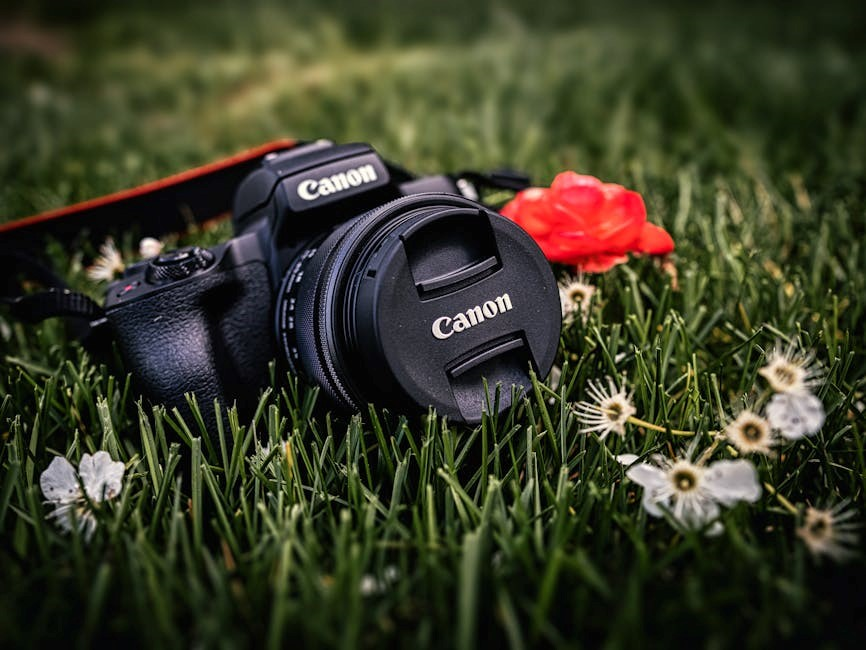
The Canon 60D’s top panel houses essential controls for immediate adjustments. These include the power switch, main dial for mode selection (Av, Tv, etc.), and the shutter button. The LCD top panel displays crucial shooting information, including battery level – a key concern for extended astro-photography sessions.
Understanding power management, referencing Lithium-Ion battery specs (ED05F-08-8), and optimizing settings are vital for prolonged use, potentially powering external devices.
Understanding the Menu System
The Canon 60D’s menu system is logically organized into several tabs, offering extensive customization options. Navigating these menus allows control over image quality (RAW vs. JPEG), white balance, and autofocus settings. Efficiently adjusting these parameters is crucial, especially when considering power consumption during extended shoots.
Optimizing battery life, referencing Lithium-Ion specs, and understanding settings impact overall performance, potentially aiding self-built power solutions.
Shooting Menu Options
Within the Shooting Menu, users can fine-tune image capture settings. Options include selecting image quality – crucial for balancing file size and detail (RAW vs. JPEG). Adjusting white balance ensures accurate color rendition, while autofocus modes dictate how the camera locks focus.
Understanding these settings is vital for astrophotography, where power management and precise control are paramount, potentially influencing a DIY power supply build.
Setup Menu Options
The Setup Menu governs the Canon 60D’s system settings. Here, you’ll configure date/time, display settings, and button customization via Custom Functions. Crucially, it controls connections to external devices like computers, enabling image transfer.
Power management options, impacting battery life (Lithium-Ion specs are key!), reside here. Addressing downrigger-related power issues, though seemingly unrelated, highlights the importance of stable power sources.
Focusing Modes and Techniques
Mastering focus is vital for sharp Canon 60D images. Explore autofocus (AF) modes – One-Shot for static subjects, AI Servo for tracking movement. Autofocus Point Selection allows precise targeting within the frame, crucial for composition.
For meticulous control, utilize Manual Focusing. Understanding how power fluctuations (relevant to external devices) don’t affect focusing accuracy is also important. Practice both techniques for optimal results.
Autofocus Point Selection
The Canon 60D offers nine autofocus points, providing flexibility in subject tracking. Select points directly via the directional buttons, or utilize AF point expansion for wider coverage. Consider how consistent power (avoiding issues like downrigger malfunctions) allows for reliable AF performance.
Automatic AF point selection is available, but manual selection grants greater control. Experiment with different point arrangements to achieve sharp focus, especially during astrophotography where precision is key.
Manual Focusing with the 60D
The Canon 60D’s manual focus is achieved via the lens focusing ring, with confirmation aided by the viewfinder and Live View’s magnification feature. Precise manual focus is crucial for astrophotography, demanding stable power to avoid interruptions.
Ensure sufficient battery life (consider Lithium-Ion specs like the ED05F-08-8) for extended focusing sessions. Practice smooth adjustments for sharp results, especially when dealing with low-light conditions.
Exposure Control: Aperture, Shutter Speed, and ISO
Mastering exposure is key to great photography with the Canon 60D. Aperture controls depth of field, shutter speed dictates motion blur, and ISO adjusts sensitivity to light. Balancing these elements is crucial.
For astrophotography, consider higher ISO settings, but be mindful of noise. Reliable power, like a fully charged Lithium-Ion battery (ED05F-08-8), is essential for long exposures and adjustments.
Aperture Priority Mode (Av)
In Av mode, you select the aperture (f-stop), and the Canon 60D automatically sets the shutter speed for proper exposure. This is ideal for controlling depth of field – a shallow depth for portraits, or a large depth for landscapes.
Ensure sufficient battery power (like a fully charged Lithium-Ion battery) for extended shooting sessions, especially when reviewing images to confirm aperture settings. Consider external power solutions for astrophotography.
Shutter Priority Mode (Tv)
Tv mode allows you to set the shutter speed, while the Canon 60D adjusts the aperture for correct exposure. This is crucial for capturing motion – freezing action with fast speeds, or blurring movement with slower ones.
Be mindful of battery consumption, particularly with prolonged use of live view or continuous shooting. A reliable power source, potentially a Lithium-Ion battery, is essential for consistent performance during dynamic shooting scenarios.
Working with Image Quality Settings
The Canon 60D offers choices between RAW and JPEG formats. RAW provides maximum editing flexibility, capturing all sensor data, while JPEG offers smaller file sizes and convenience. Consider battery life; RAW files demand more processing power.

White balance adjustments are vital for accurate color rendition. Experiment with presets or custom settings to achieve natural-looking images. Proper settings, combined with a fully charged Lithium-Ion battery, ensure optimal results.
RAW vs. JPEG
Choosing between RAW and JPEG impacts image quality and file size. RAW captures all data from the sensor, offering extensive post-processing control – crucial for astro photography where detail recovery is key. JPEG compresses images, reducing file size but sacrificing some data.
Consider your workflow and storage capacity. RAW files, while larger, are ideal for critical work, while JPEGs suit quick sharing. Battery consumption is higher with RAW due to increased processing.
White Balance Adjustment
Accurate white balance ensures colors appear natural in your photos. The Canon 60D offers presets (Auto, Daylight, Cloudy, Tungsten, Fluorescent) and a Custom setting for precise control. Auto White Balance is convenient, but can be inaccurate in mixed lighting.
For astro photography, custom white balance is vital. Experiment to achieve realistic star colors. Incorrect white balance impacts image quality, potentially requiring extensive post-processing.
Utilizing the Canon 60D for Video Recording
The Canon 60D records Full HD 1080p video at various frame rates. Access video settings through the menu, adjusting resolution, frame rate, and audio input. Consider external microphones for superior sound quality, crucial for professional results.
Power management is key during extended recording; a reliable power supply, potentially built for DSLR use, is recommended, especially for long-duration projects like astrophotography.
Video Recording Settings

Navigate to the video settings menu to customize your recordings. Resolution options include 1080p, 720p, and SD. Frame rates range from 24fps for a cinematic look to 30fps for standard video;
Adjust audio levels and select an internal or external microphone. Remember, consistent power is vital; explore options for extended battery life or external power sources for longer shoots.
Audio Control During Video Recording
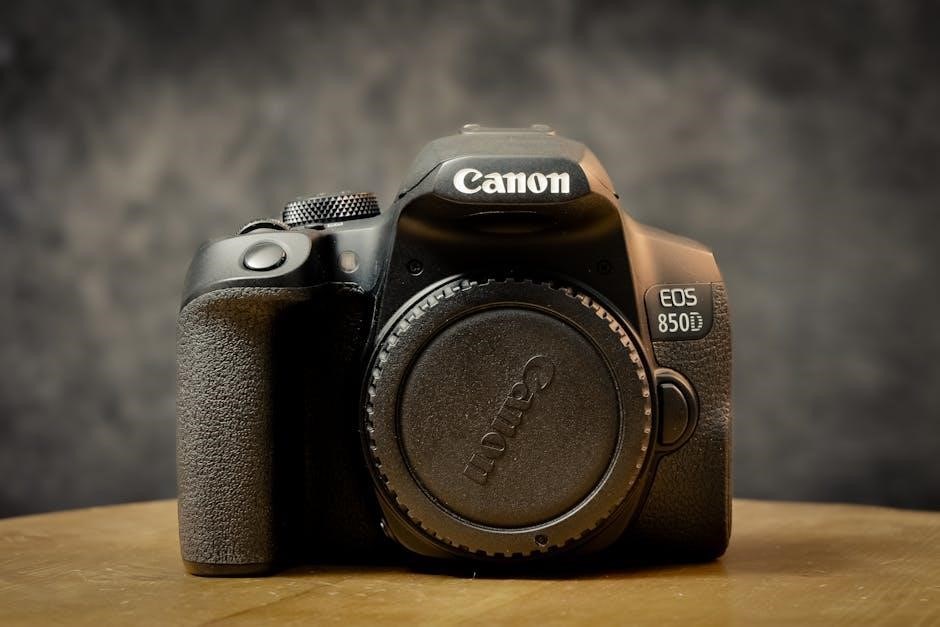
The Canon 60D offers manual audio level control for precise sound recording. Monitor audio levels using the headphone jack and adjust the gain accordingly to prevent clipping or excessively quiet audio.
Consider an external microphone for improved sound quality, especially in noisy environments. Reliable power is crucial; ensure sufficient battery life or utilize an external power supply during extended recording sessions.
Power Management and Battery Information
The Canon 60D utilizes a Lithium-Ion battery (like the ED05F-08-8) for power. Understanding battery specifications and optimizing usage are vital, particularly for astrophotography or extended shoots.
Conserve power by utilizing the LCD screen efficiently and employing power-saving modes. Consider external power solutions for prolonged operation, addressing potential issues related to power supply for Canon equipment.
Canon 60D Battery Specifications (Lithium-Ion)
The Canon 60D typically employs a Lithium-Ion battery, with models like the ED05F-08-8 being common. These batteries, often utilizing US18650V3 cells, adhere to safety standards like UL1642 (File No. MH12566).
Typical capacity reaches around 0.21tA discharging at 2.5V, during standard charging. Individual cells may display markings like “THISS 18650HR15 2019.08.03 3.6V”, indicating capacity around 1500mAh.
Optimizing Battery Life
To maximize Canon 60D battery performance, consider power-saving features. Reducing LCD brightness and shortening auto-review times significantly extends usage. Disable unnecessary features like image stabilization when not required.
For astrophotography or extended shoots, explore external power solutions, building a supply for the 7.4V requirement. Properly storing batteries when not in use, avoiding extreme temperatures, also preserves capacity.
Connecting to External Devices
The Canon 60D offers versatile connectivity options. Utilize the remote control port for convenient, hands-free operation, ideal for long exposures or wildlife photography. Connecting to a computer via USB facilitates image transfer and camera control through Canon’s software.
Ensure compatible cables and drivers are installed for seamless communication. Consider external power solutions during extended computer connections to avoid draining the camera’s battery.
Remote Control Operation
The Canon 60D supports remote shutter release for precise control, minimizing camera shake during long exposures and enabling unique photographic opportunities. Compatible remote controls connect via the camera’s remote terminal, offering functions like single-shot, continuous shooting, and bulb mode.
Ensure the remote control is properly paired and configured within the camera’s menu settings for optimal performance. This feature is invaluable for astrophotography and time-lapse sequences.
Connecting to a Computer
Transferring images from your Canon 60D to a computer is straightforward using a USB cable. Once connected, the camera appears as a removable drive, allowing direct file copying. Alternatively, utilize Canon’s EOS Utility software for advanced features like image browsing, remote control, and camera settings adjustments.
Ensure EOS Utility is installed and updated for seamless compatibility. This method facilitates efficient workflow and image management, crucial for post-processing and archiving.
Troubleshooting Common Issues
Encountering problems with your Canon 60D? Common issues include downrigger malfunctions – specifically, inability to tighten the line after reaching desired depth. Power supply concerns, especially during extended astro-photography sessions, are frequent. Battery performance can also degrade; check specifications like the ED05F-08-8 Lithium-Ion for proper voltage.

If issues persist, consult Canon’s support resources or a qualified technician for diagnosis and repair.

Downrigger Issues (Related to Power Supply for Canon Equipment)
Downrigger problems often stem from power inconsistencies. A Canon uni-troll 6 failing to tighten after deployment suggests a potential electrical fault within the system. Users report issues with the line unwinding freely but lacking tension. Investigating the power source—perhaps a failing battery or inadequate voltage—is crucial.
Ensure compatibility with Canon equipment and consider external power solutions for prolonged use.
Addressing Camera Functionality Problems
Troubleshooting the Canon 60D requires a systematic approach. Power-related issues are common, especially during extended use like astrophotography. Verify battery charge (ED05F-08-8 Lithium-Ion is a specified type) and connections. If problems persist, examine menu settings and reset to defaults.
Consider external power sources for longer shoots. Consult online forums for specific error codes and user-reported solutions.
Advanced Features and Customization
The Canon 60D offers extensive customization options. Explore Custom Functions to tailor button assignments and camera behavior to your shooting style. Picture Style Settings allow precise control over image color and tone.
Experiment with these features to optimize the camera for specific scenarios, enhancing creative control. Remember to document your settings for consistent results and easy recall.
Custom Functions
Canon 60D’s Custom Functions provide personalized control. Reassign buttons for quicker access to frequently used settings, streamlining your workflow. Customize autofocus behavior, exposure settings, and menu display preferences.
These functions allow adapting the camera to individual shooting needs, enhancing efficiency and creative expression. Careful configuration ensures optimal performance for various photographic styles and conditions.
Picture Style Settings
Canon 60D’s Picture Style settings offer creative control over image appearance. Choose from Standard, Portrait, Landscape, Neutral, Faithful, and Monochrome, or create custom styles. Adjust sharpness, contrast, color saturation, and color tone to achieve desired looks directly in-camera.
These presets influence JPEG image rendering, while RAW files retain full data for post-processing flexibility. Experimenting with Picture Styles allows tailoring images to specific subjects and artistic visions.
Leave a Reply
You must be logged in to post a comment.